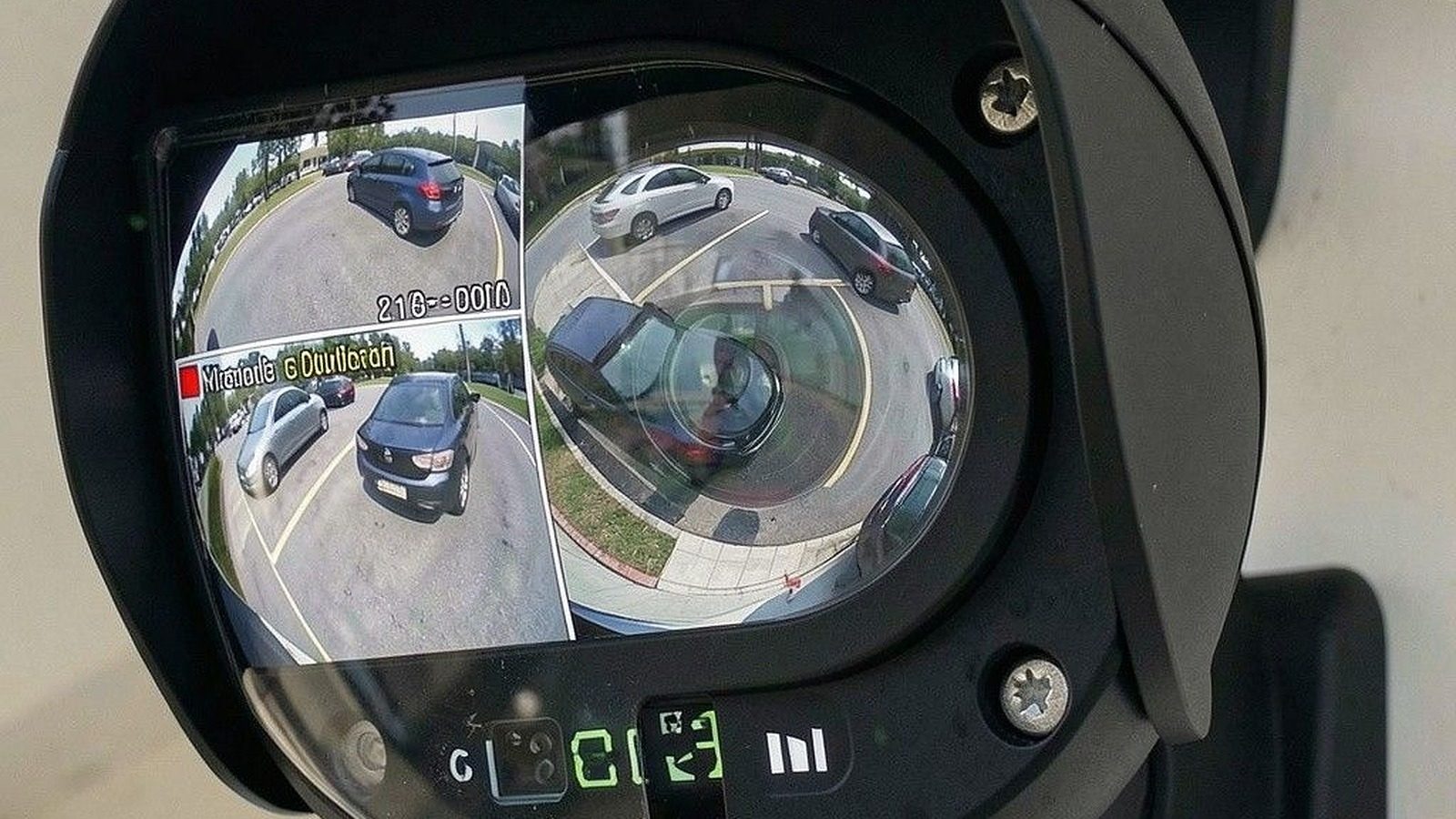
A camera on a pole at the entrance to a subdivision does not look like much. It is about the size of a shoebox. It runs on a small solar panel. Most people drive past it every day without noticing it.
That camera reads the license plate of every car that passes. It saves the plate number, the time, the date, and a photo. It can also note the color of the car, the make, a roof rack, a dent, a bumper sticker.
The company that makes most of these cameras is called Flock Safety. Police departments buy them. So do cities. But Flock did not start with police. It started with neighborhoods.
"Typically, when we work with agencies, we start with neighborhood HOAs," a Flock marketing director told The Intercept in 2023.
Today the cameras are everywhere. A September 2026 investigation put Flock's network at more than 120,000 cameras. Texas alone has around 13,000. The company takes in about $500 million a year and is valued in the billions.
A large share of those cameras do not belong to the government at all.
They belong to homeowner associations, shopping malls, hospitals, and stores. Flock says more than 1,000 businesses use its private products, including four of the ten biggest retailers in the country, seven of the ten biggest malls, and ten of the forty largest hospital systems. Home Depot and Lowe's have the cameras in their parking lots.
That is the part almost nobody has looked at.
Who owns the record of your street
When a city buys these cameras, there are at least some rules. City councils vote in public. Police have to keep a log of every search. In most states those logs are public records, so a reporter or a resident can ask to see them.
When an HOA buys the same camera, almost none of that applies.
An HOA board is not a government. It does not have to hold a public vote. It does not have to keep a search log. It does not have to tell you the cameras are there.
"A board member with camera access may not answer to anyone beyond the HOA itself," attorney David Weisselberger said this August, after the city of Brentwood, California ordered an HOA to take its Flock cameras down. The city had approved them by mistake.
Only a few states have anything on the books. California at least requires private camera owners, including HOAs, to write down a policy for how the data gets used, and it bars public agencies from selling plate data. Most states require nothing.
Nevada requires nothing at all. There is no state law here on license plate cameras. A state Senate committee voted last month to ask for a bill that would add rules. It would not be debated until 2027.
The cameras have also gone up in places that never approved them. In north Fort Worth, Flock installed dozens on public property without city permits, and the Texas Department of Public Safety sent the company a cease and desist in July 2024 for working without a state security license.
In one Miami neighborhood, one man owns it all
The clearest picture of how this works comes from Coral Gate, a neighborhood in Miami.
Two residents raised the money themselves. They collected $100 each from about 100 of the neighborhood's 463 households. Six solar cameras went up on the four entrances and two inside streets.
One of those residents told public radio station WLRN that he personally owns the plate data. Not the city. Not the police. Him.
Flock offers a feature called a safe list that lets residents ask to be left out of the record. He chose not to turn it on. He also started a private Facebook group only for the people who had paid.
"I don't like what this has done to my neighborhood," one resident who first supported the cameras told the station.
Nobody in Coral Gate has accused him of doing anything wrong. That is not the point. The point is that a record of when every neighbor comes and goes ended up in the hands of one neighbor, and nothing in the law says it cannot.
What the record actually shows
People often assume a plate camera only matters if you break the law.
That is not how it works. The camera does not look for criminals. It records everyone. What comes out the other end is a pattern.
"You could put together a pattern," said Keith Gibbs, a resident of a North Carolina neighborhood whose HOA installed the cameras. A pattern of which cars belong to which houses. Who leaves at 6:40 every morning. Who comes home at 2 a.m. Whose car has been gone all week.
A Central Florida homeowner, David Moss, put the worry more plainly this month. Someone, somewhere, knows when a homeowner is at home and when he is not.
Over months that record shows who visits you, how often, and whose car sits in your driveway overnight. It shows which church, which clinic, which union hall, which bar. It shows when your house is empty.
They do not sell your data. They rent the search.
Flock's contract makes a promise that sounds strong. Section 4.1 says "Flock shall not sell Customer Data."
Read it closely. It says Flock will not sell the data. It does not say Flock will not charge people to search it.
That is the whole business. Flock does not hand over files. It rents out a search box, month after month, year after year.
The Illinois State Police pays Flock about $50,000 a year for access to the database. Not for cameras. For the ability to look.
In November 2025, Sen. Ron Wyden asked the Federal Trade Commission to investigate the company. His letter says Flock stores billions of vehicle scans every month. It also says about 75 percent of Flock's police customers turn on a setting called the National Lookup Tool, which lets their data "be searched by all other enrolled Flock customers."
Now picture what your HOA is buying. It pays somewhere around $2,400 to $3,000 a year for one camera. That camera records your neighbors. Those records go into a pile that paying customers in other states can search.
Your HOA pays to fill the database. Someone else pays to search it. Nobody pays you, and nobody asked you.
There is one more gap in that promise. The contract says Flock will not sell the data. It says nothing about the HOA or the store that owns it. An attorney who works with California homeowner associations wrote that an HOA with no limits in its own policy is "perfectly free to share plate data...to anyone else they choose."
A market already exists. A company called Digital Recognition Network built its own plate database using cameras mounted on repo trucks.
Reporting in 2019 found it selling searches for about $20 each, or about $70 with live alerts, to repo firms, insurance companies, and private investigators. Nothing in Nevada law would stop a local HOA or business from doing something similar with the record of your street.
The cameras talk to each other now
A single camera is one thing. A network is another.
Flock feeds its data into police software made by other companies: Axon, Motorola, Genetec, Mark43, and Tyler Technologies. In October 2025 it launched something called the Business Network, which lets stores share plate numbers with each other and get an alert when a car turns up on a shared watch list.
So a private watch list can follow a car from a store lot to a mall to a hospital, run by companies, with no judge and no police report anywhere in it.
Flock is also building a tool called Nova. Leaked details reported in May 2025 described it as a way to jump from a plate to a person, linking a car to an owner and then to that person's spouse, friends, and associates, using around 20 sources of information. After the reporting, Flock dropped one of those sources, data that had been stolen in hacks.
How we know misuse happens, and where we cannot know
We know police misuse these systems, because police search logs are public records.
A Milwaukee officer ran his girlfriend's plate 124 times in two months.
In the box asking why, he typed the word "investigation" every single time. A Texas deputy searched more than 83,000 cameras to track down a woman who had ended a pregnancy. The Institute for Justice has been counting cases of officers using plate readers to track people they were interested in romantically. Two of them were police chiefs.
Almost none of that was caught by the built in audits. It was caught by outsiders who got hold of the logs.
The system also gets things wrong. The Institute for Justice has documented 33 cases of innocent drivers stopped, held at gunpoint, or jailed because a camera misread a plate. In Sherwood, Arkansas, in February, officers pulled a couple over at gunpoint after a camera got one character wrong. Their six week old baby was in the car.
Now the hard part.
There is no similar list for HOAs and businesses. Not one documented case turned up in this reporting of a board member using the cameras to watch a neighbor.
That absence is not proof it is not happening. HOA logs are not public records. No one can file a request for them. No state requires a private camera owner to audit itself, or to tell you when someone looked you up. Every police case above came to light because someone outside could check. On the private side, there is nothing to check.
Flock says nothing is shared unless the customer turns sharing on, and that shared data cannot be passed along again without permission.
Illinois shows what that promise is worth. The state had a law against sharing plate data for immigration enforcement. Federal border agents got access anyway, through a Flock pilot program. The Illinois Secretary of State found the company in violation of state law, and Flock's chief executive admitted it afterward: "We clearly communicated poorly."
What to ask
If cameras go up at your entrance, or already have, these are fair questions for your board, in writing:
- Who can log in, and what are their names?
- Is there a search log, and can members see it?
- How long is the data kept?
- Is the National Lookup setting turned on, so agencies in other states can search it?
- Is it shared with anyone else, and can it be sold?
- Is the safe list turned on?
- Who voted on this, and when?
A board that has thought this through will have answers. A board that has not will not.
That is the real story here. Not a villain. A camera at the entrance, a login, a monthly bill, and nobody whose job it is to ask who is watching.
Flock Safety's own documents
- Flock Safety data ownership terms, Section 4.1
- Flock Safety services agreement, Falcon cameras (full contract, PDF)
- Flock Safety, "Who Really Has Access to Your Flock Data"
- Flock Safety, Business Network launch, October 2025
- Flock Safety on partners and integrations
- Flock Safety pricing page
- Flock Safety data privacy page
Where the public record is empty, and on private camera misuse it is empty, this article says so rather than filling the gap.