Nevada's Open Meeting Law starts with one plain line: "All public bodies exist to aid in the conduct of the people's business" (NRS 241.010).
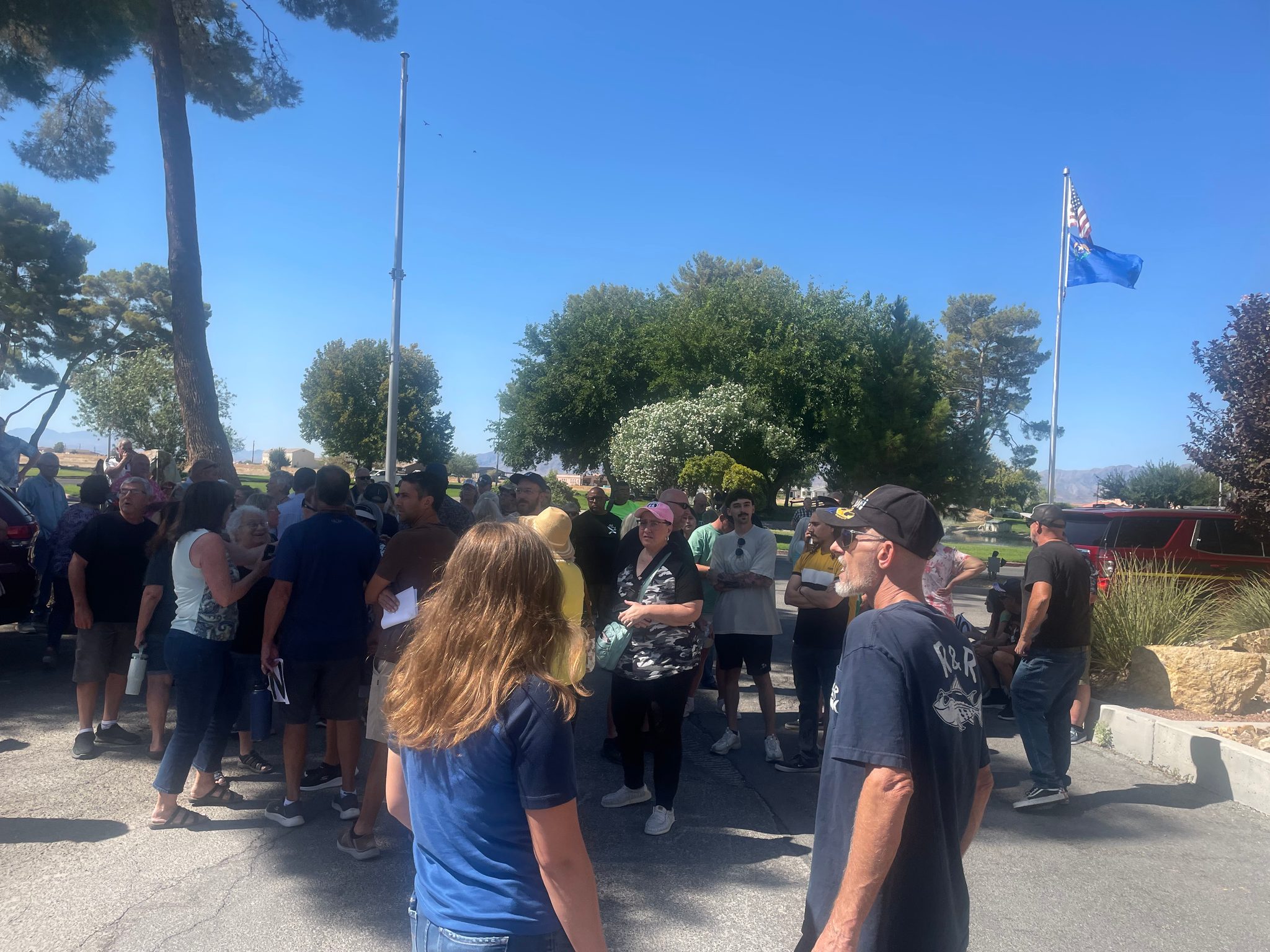
We watch what the board does, not what it says. Over the last few months, Pahrump residents have packed the room, read the fine print and pointed out the problems out loud. Over and over, the board heard them and voted the other way.
Here are three examples, and one door that keeps closing.
1. The solar rules: "just small wording changes"
Nye County has a law for big solar farms, battery yards, substations and power lines. It is Chapter 17.10 of county code. This year, the county tried to rewrite it with Bill 2026-01.
The bill packet was prepared and presented by Assistant Planning Director Celeste Sandoval. It lists Commissioner Debra Strickland as the commissioner who proposed it. At a Planning Commission meeting in August, Strickland said the bill came from a private citizen. That person's name is not in the packet. It has still never been made public.
Strickland kept telling the public the same thing. “The changes were small”, “It was cleanup, “Just wording”. Sandoval also tried to down play some of the changes.
Residents read it. Here is what they found:
- Neighbors lose their veto. Today, a company that wants out of a setback must bring a signed agreement from every neighbor it affects. The bill swaps that for letters that "may" be included.
- The bank gets a pass. A permit could pass to a lender, or to whoever buys it at foreclosure, without coming back to the board.
- Height limits can bend. The 25-foot height cap could now be waived. Before, it could not.
- Starting means paperwork. Pulling a building permit would count as starting construction. No dirt has to move.
- The zone list disappears. Section 17.10.080, the list of which zones allow big solar, is deleted. Nothing replaces it.
- Schools drop out. The words "municipality, or school district affected" are crossed out.
That is not wording. That is who gets a say.
Two citizen boards looked at the bill. The Pahrump Public Lands Advisory Committee voted it down with no one in favor on August 11.
The Pahrump Regional Planning Commission also said no. That second "no" was never put in the packet the commissioners got. Strickland attended both meetings as the BOCC liaison.
It did not matter. Reports and the BOCC agenda videos shows Strickland pushed hard for the bill and voted for it. Commissioner Bruce Jabbour and Commissioner Ian Bayne voted no. The amendments to the bill was barely shelved.
The town pointed out every problem. The bill passed without the fixes.
2. Wilson Ranch: 830 homes, and the town pays the difference
On September 15, the board took up Bill 2026-09. It is a development agreement with a company called MACKK, LLC for a project called Wilson Ranch.
A development agreement is a deal. The builder gets promises from the county. The county is supposed to get something back.
Here is what the builder gets, written out clearly:
- 830 homes on 5,000-square-foot lots. That is about one quarter of the lot size county rules would normally require.
- A freeze. County zoning, subdivision and growth rules are locked for the life of the deal, even if the county changes them later.
Here is what the town gets, according to the agreement residents read at the podium:
- $1.6 million to cover five deputies and three firefighters for five years. Do the math. That is about $40,000 per person, per year, before benefits, trucks or gear. That is less than a new deputy's starting pay alone. We subsidize the shortfall.
- No plan for after year five. The money does not rise with prices.
- "Not applicable." The county's own agenda form says the financial impact is "not applicable." There was no money review at all, even though the agreement itself admits roads and services are not ready.
Residents pointed out more. One section says building "will not be interrupted" even if needed roads and pipes are missing. Another lets MACKK sell the deal to a new builder without the board approving the buyer. The cover says five years, but the agreement says ten, plus a five-year renewal. At an earlier hearing in August, the section that was supposed to list the money did not have a single dollar in it.
People asked the board to wait. They asked for a study of what 830 more homes mean for Pahrump's water, roads, schools, deputies and ambulances, all added together with the other homes already coming.
The board approved it.
3. MediWaste: the wrong law, the easy door
This one follows the same pattern.
MediWaste wants to burn, or "incinerate" medical waste at 1850 East Basin Avenue, on top of Pahrump's only water supply. The waste includes chemotherapy waste and body-part waste, according to the state's own draft permit.
Nevada has a special, tougher review for businesses that handle hazardous material. It is in NRS 278.147. County planning, run at the time by Brett Waggoner, did not use it. The plant went through an ordinary conditional use permit under NRS 278.315 instead. That is the same kind of permit a storage yard gets.
The state had already warned in writing that this process can catch fire and explode. That warning was printed in the county's own staff report.
The Pahrump Regional Planning Commission approved it 5-0 anyway.
Waggoner is now the County Manager. The state signed MediWaste's permit in late August after hundreds of public comments against it. We laid out the whole path here.
Behind a closed door
Public business is supposed to happen in public. Nevada law says, "All meetings of public bodies must be open and public" (NRS 241.020).
There are only a few reasons a board can meet in private, such as talking about one person's conduct or getting legal advice on a lawsuit.
Now look at June 16. That was the day the board set the first hearing for the solar bill. The meeting started late. During public comment, resident Matthew Winterhawk told the board it was "11 minutes late." He said the board had held "a closed session, which is not on the agenda," and called it an open meeting law violation. That is in the official minutes.
The same minutes say the meeting was called to order at 10:00 a.m. No closed session is listed.
Then, at a BOCC meeting in September 9,2026, Strickland said that there had been a closed-door meeting. She did not say who was in it or what was discussed.
That leaves questions the board has never answered in public. Who met? Was a majority of the board there? What was talked about? If it was legal advice, from which lawyer, and about what case?
To be fair
The board does not always go against the town. On August 18, after months of packed meetings, commissioners reluctantly voted 5-0 to ban data centers in the Pahrump water basin.
Strickland has made a real point too. Most of Nye County is federal land, and the county cannot tax it. A county that short on taxable land needs money from somewhere, and builders bring it.
Needing money is not the same as giving away the neighbor's signature, freezing the rules for 830 homes, or skipping the tough review for a medical waste burner.
The pattern
Put the three side by side.
- The public reads the fine print. The board says it is minor.
- Citizen boards say no. The "no" does not make it into the packet.
- The builder or permit holder gets clear, written promises. The town gets blanks, maybes and "not applicable."
- Some of the talking happens where you cannot hear it.
Each vote alone can be explained. Together, they answer the question in the headline.
What you can do
- Ask for the records. Anyone can request public records under NRS Chapter 239. The county must answer within five business days. Ask who first asked for Bill 2026-01, and for any notes or emails about a closed meeting on June 16.
- Watch the tape. Meeting video is posted on the county's video archive.
- File a complaint. Open Meeting Law complaints go to the Nevada Attorney General.
- Follow the money. Campaign donations to every commissioner are searchable in the state's Aurora system.
- Show up or watch. Every agenda is posted at the county Agenda Center. The board votes in front of you. Let them know your watching.
Sources
Meetings: BOCC agenda, June 16, 2026 and minutes · BOCC agenda, Aug. 18, 2026 (Item 7, Bill 2026-01; Item 9, Bill 2026-09) · BOCC agenda, Sept. 15, 2026 (Item 9, Bill 2026-09) · Notice of continued hearing, Bill 2026-09 · County Agenda Center
Law: NRS Chapter 241, Open Meeting Law · NRS 278.147 · NRS 278.315 · NRS Chapter 239, Public Records
MediWaste: Staff report, CU-24-3 · RPC minutes, April 10, 2024 · NDEP draft permit SW1900REV00
Other reporting: Pahrump Valley Times, data center ban · Nevada Current, Aug. 20, 2026
More from Nye's Lies: Nobody in Pahrump Writes Like This · How Nye County Facilitated MediWaste · The people of Pahrump said no
Votes and statements at the solar and Wilson Ranch hearings, and Commissioner Strickland's September remark, are from direct observation and BOCC’s recorded video. Details of the Wilson Ranch agreement are from the agreement as read into the public record. This story does not accuse anyone of a crime. It lays out the public record and asks fair questions. See something we got wrong? Tell us.