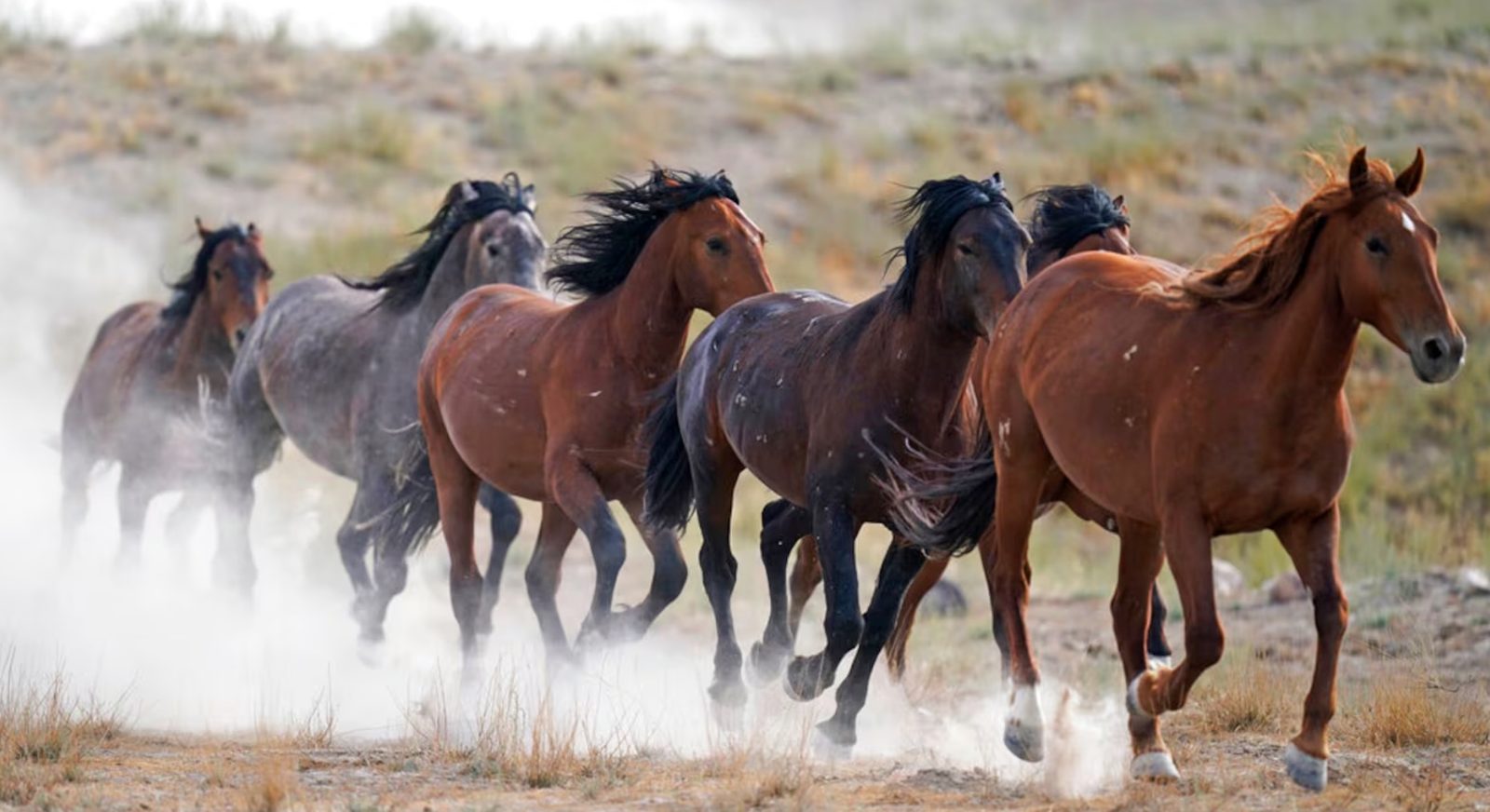
On August 20 the New York Times published an investigation. It found wild horses sold by the Bureau of Land Management ending up in slaughterhouses. Those horses are federally protected.
The Slaughter Loophole
The loophole is in who signs what. A horse that is adopted keeps its federal protection. A horse that is sold loses it immediately. The first buyer signs a contract promising not to slaughter the animal. But that buyer can pass the animal to a middleman. The middleman never signed anything, so he can legally send the animal to slaughter.
The Times reports the BLM gave a bulk sales contract to Brandon Jones. He is an Ohio livestock trader. Two months earlier he was cited for breaking the federal Packers and Stockyards Act. He took 496 wild horses in a single year, with taxpayers covering the shipping. The paper found horses sold to slaughter as soon as one day after the new owner got title.
The agency sold about 3,700 horses in 2025, more than double the year before.
The Interior Department says the BLM "does not sell or send wild horses to slaughter."
The BLM just fed 1,035 animals from Nye County into that system: 97 wild horses and 938 burros.
The BLM ran two roundups in Nye County this year and publishes a daily report for each. The reports record deaths. Here is what the reports say.
Beatty
Bullfrog Herd Management Area, April 3 to 11. 513 burros gathered. 507 shipped. None released. Four died.
One of the four was found dead. The BLM put the other three down.
A jack is a male burro. A jenny is a female. A foal is a baby.
Body condition is the Henneke score, a 1 to 9 scale used on horses and burros. A 1 is emaciated: every bone showing, no fat anywhere on the animal. A healthy score is 4 to 6.
April 6. A burro of about a year and a half was found dead during a routine check. Henneke score 2.
April 8. A one month old orphaned foal was euthanized. It would not take feed from a person. Henneke score 1.
April 9. A ten year old jack was euthanized. He was blind in one eye. Henneke score 4.
April 11. A two year old jack was euthanized. He had a deformed leg and limited mobility. Henneke score 2.
Read the April 8 and April 9 entries again. A ten year old jack was put down for being blind in one eye. A one month old orphaned foal was put down five days in. It would not take feed from a person.
Pahrump
Spring Mountains Complex, March 16 to June 19. 97 wild horses and 425 burros gathered. None released. One died, a 13 year old jenny, recorded May 20 as a broken neck.
The complex is three herd management areas covering 616,912 acres.
Johnnie. 179,368 acres. Managed for 65 to 108 burros. The BLM sets no horse target here, though it says horses do roam the range. This is the range on Highway 160 between Pahrump and Johnnie.
Wheeler Pass. 275,575 acres. Managed for 47 to 66 horses and 20 to 35 burros.
Red Rock. 161,969 acres. Managed for 16 to 27 horses and 29 to 49 burros.
Add those up. The BLM's target is 63 to 93 horses and 114 to 192 burros. That target is the number meant to stay on the range, not a cap on removals.
The BLM removed 97 horses and 425 burros. That is more than the whole target, in both columns, taken off in one gather.
Two animals are missing
Beatty reports 513 gathered and 507 shipped, with four deaths. That leaves two unaccounted for.
The foals are the harder gap to explain. The BLM counted 28 gathered and 25 shipped, and recorded one foal death. That leaves two foals unaccounted for, out of 28.
The figures are stamped as of April 13, so shipping may have continued. Or the count is wrong. We are not telling you which. We are telling you the report does not add up, and the link is right there.
Where they go next
The survivors went to Palomino Valley, the BLM holding corrals north of Reno, to be adopted or sold. Anyone can apply to adopt a burro or a horse.
Every animal that came off the range alive is now in the adoption and sale pipeline. The BLM's own line is that animals "not adopted or sold" keep their federal protection.
Read that again. The protection stays with the animals nobody buys.
Anybody who drives Highway 95 through Beatty knows why the burros were rounded up. They stand in the road. You have braked for a burro. You have seen a dead burro on the shoulder. Maybe you have hit one. The BLM says the same thing in its gather notice. Burros wander onto Highway 95 through town. Collisions are reported most weeks.
Nobody in Beatty needs convincing that the herd had to be thinned. That was never the argument. The argument is what happens to these burros after the trailer leaves.
The investigation: New York Times, August 20, 2026. Also covered by Newsweek and Humane World Action Fund.