Pahrump does not drink a single drop of the Colorado River.
That will not protect your power bill.
On Aug. 21, federal officials signed new rules for the river. The seven states that share it could not agree on a plan, so the government wrote one for them. Arizona, California and Nevada now have to cut 1.25 million acre-feet a year in 2027 and 2028. An acre-foot is about 326,000 gallons, roughly what two homes use in a year.
Nevada's share of the cut is 50,000 acre-feet. That lands on Las Vegas, which draws its water straight from Lake Mead.
Pahrump sits on top of its own water, the groundwater in Basin 162.
The part of this that reaches Pahrump comes down a wire.
The dam that pays part of your bill
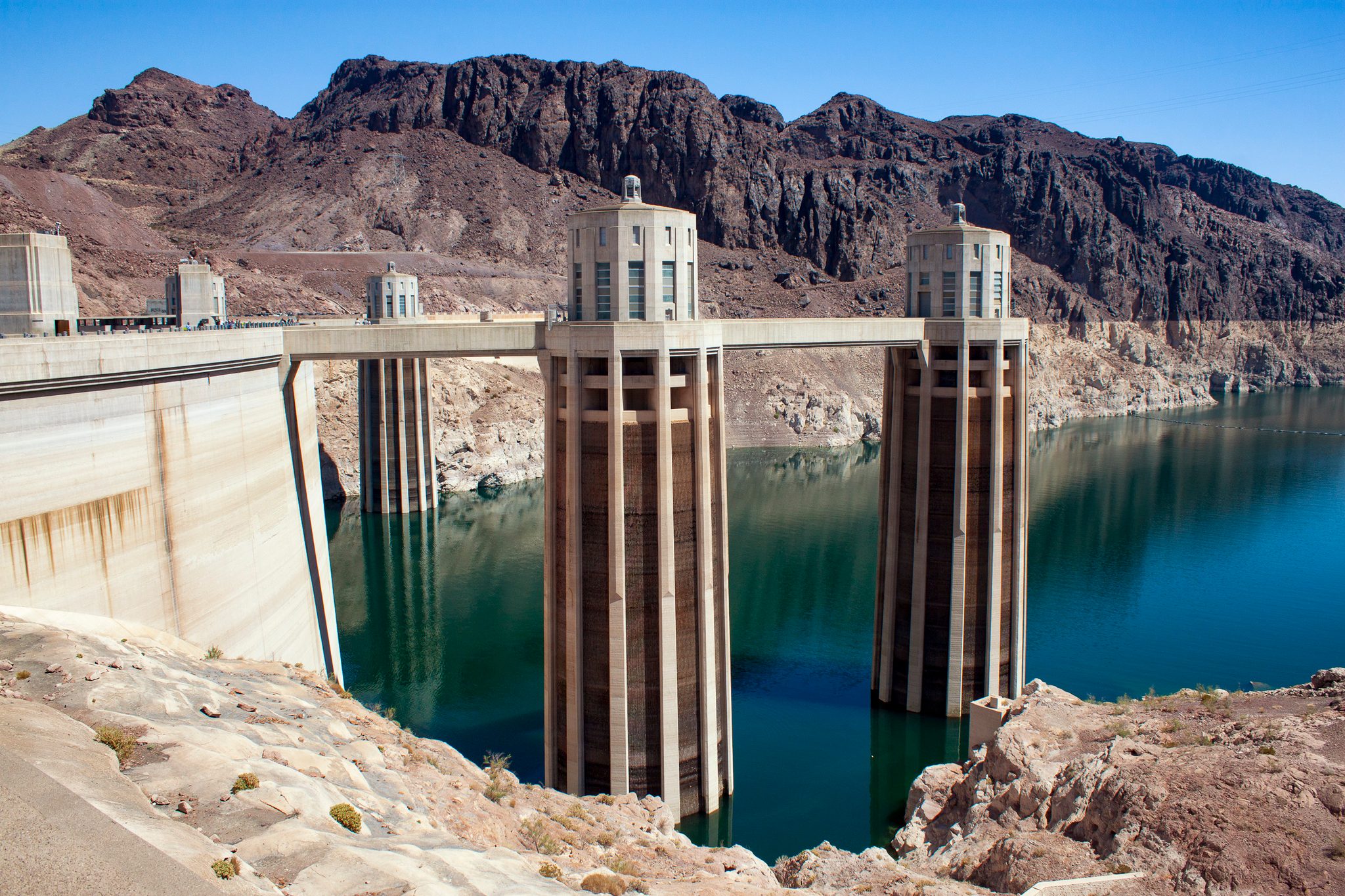
Lake Mead fell to about 1,040 feet above sea level in early August. That is the lowest reading since the government started tracking it daily in 1935, and Reclamation has confirmed the record.
Five feet below that sits a number worth memorizing: 1,035 feet.
When Lake Mead drops past 1,035 feet, a dozen of Hoover Dam's older turbines shut down. They were never built to run on a shallow lake. The dam's power output falls from 1,302 megawatts to 382. That is a 70% cut.
The Bureau of Reclamation has $52 million approved for three new turbines that can run down to 950 feet. Those would soften the drop to about 58%. They are not installed yet.
Nevada receives about a quarter of Hoover's electricity. It is federal power, and it is cheap. The Colorado River Commission of Nevada buys it and resells it to a short list of Nevada utilities.
The VEA is on that list.
Twenty-one percent, not seven
The last public accounting available came out of a Colorado River Commission allocation hearing in September 2018. Valley Electric was one of four utilities applying for a share of federal hydropower, and the supporting table, built on the co-op's own 2017 load figures, shows it drawing about 21% of its electricity from federal dams.
That 21% comes from three places. Hoover Dam. The Parker-Davis project downstream. The Salt Lake City projects, which is mostly Glen Canyon Dam at Lake Powell.
You may hear that Hoover is only about 7% of Valley Electric's power. That is accurate, and it is misleading.
All three sources are the same river. Lake Powell has been sitting near its own shutoff point. When the river falls, all three fall together.
Tim Hafen, a former VEA board member, put the co-op's hydropower share at 18 percent back in 2017. Call it somewhere between 18 and 21%. Either way, roughly one dollar in five of Valley Electric's power supply is tied to a river that is running out.
What that looks like on a bill
Two Nevada utilities have already lived it.
The Overton Power District serves about 19,000 customers in Clark County. It gets about a quarter of its power from Hoover, close to Valley Electric's share. Last year Overton's Hoover delivery fell by 15 percent. That single cut more than doubled the district's power costs.
"Everything that we don't get from Hoover has to be bought from our market contract at a far higher rate," general manager MeLisa Garcia said.
Lincoln County Power District is worse off. It gets 70% of its electricity from Hoover, and that is projected to fall to 30% by 2027. When Lake Mead hit a record low in 2022, the district raised rates for two years straight.
"For 90 years the customers at Lincoln County Power have relied on cheap hydropower, and unfortunately that's not the case anymore," general manager Dane Bradfield said.
Valley Electric has not publicly released a forecast of what the Hoover cliff will cost its members.
Overton's experience is the closest thing available to one. A 15% cut doubled costs there. Nevada is now looking at a 58 to 70% reduction in Hoover's capacity.
Here is the part most members will not see coming.
Valley Electric's residential rate schedule includes something called a power cost adjustment. When wholesale power gets more expensive, that charge moves. It does not require the board vote and the public argument that produced the 70 percent service charge increase in 2022, or the 17 percent energy rate hike that had Nye commissioners asking the district attorney to investigate.
The money comes out either way. The second way is quieter.
Water is electricity
Here is the part that connects everything, and it is simple physics.
Every acre-foot that gets consumed upstream is an acre-foot that never spins a turbine at Hoover. Water taken out of the Colorado is power taken out of the grid. The lower the lake, the less pressure behind the blades, and the less electricity comes out the other side.
So the question for Pahrump is not whether anyone is pumping the valley's aquifer. The question is who is drawing down the lake, and who is lining up to buy the electricity that lake is no longer making.
The answer to both is the same industry.
The load nobody planned for
Look at Arizona first.
An Arizona State University study counted 66 data centers finished or under construction in central Arizona. Twenty-five are in Phoenix. Nine are in Tucson. Eight are in Mesa. Those cities get a large share of their water from the Colorado River, in a state facing a 760,000 acre-foot cut, the deepest of any state.
Cooling water in the Phoenix area alone is projected to grow 870 percent, from 385 million gallons a year to more than 3.7 billion.
Data centers are not why the river is low. Farming uses 52 percent of it, and alfalfa alone uses more than every city and industry in all seven states combined. The river is short because the 1922 agreement handed out more water than the river carries, and because the last 26 years have been dry.
The problem is not their share of the water. It is what they do on the other side of the meter.
NV Energy has received interest inquiries from data centers seeking 22 gigawatts of power. Nevada's entire system peak is about 8,500 megawatts. That is inquiries totaling more than two and a half times everything the state uses at its hottest moment, arriving exactly as the cheapest generator on the system winds down.
Valley Electric buys its replacement power on that market.
Why the county's ban does not reach this
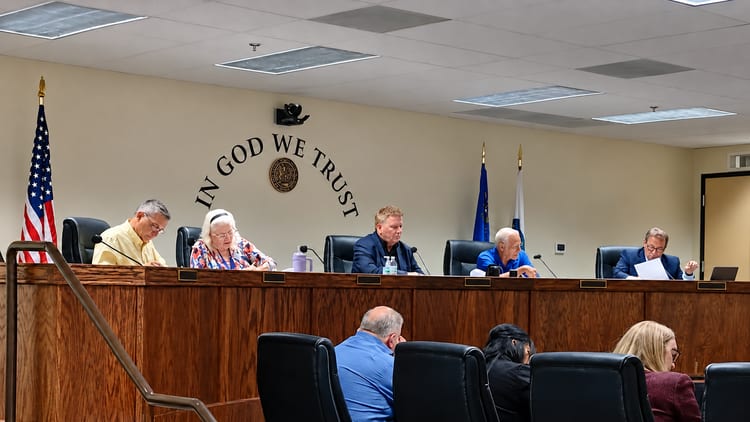
On Aug. 18, Nye County commissioners voted 5 to 0 to ban data centers in Basin 162, the groundwater basin under Pahrump. It is the strongest move a county can make, and it is a water tool aimed at something that is also a power problem.
Zoning stops at the county line. Basin 162 runs into Clark County and crosses into Inyo County, California, so a data center on the Clark County side would pump the same aquifer and break no Nye rule. County staff said so plainly in an earlier agenda file: "Nye County has no authority regarding solar development in Clark County."
"It's like Clark County is the golden child and Nye County doesn't get a lot of say," Nye County Natural Resources Director Megan Labadie told the Review-Journal.
The grid does not stop at the county line either, and that part no ordinance touches. A data center built in Clark County, in Arizona, or in Storey County still bids against Valley Electric for the same megawatts.
The trade nobody has priced
There is a fix for the water side. It is called closed-loop cooling, and it nearly eliminates what a data center evaporates. Southern Nevada banned evaporative cooling in new development in 2024, which pushes builders toward it.
It works by using more electricity.
Sit with that in a valley about to lose the cheapest fifth of its power supply. Solve the water problem, enlarge the power problem.
A farmer can leave a field unplanted. A homeowner can let the lawn die. Las Vegas tore out its grass. A data center runs at full load in the driest year on record, because that is what the contract says. The rules signed on Aug. 21 say nothing about them.
Nye County writes rules for data centers in the rest of the county on Sept. 14. The conversation so far has been about water. The bill that arrives first will be for power.
The river is falling. The dam is slowing down. Everybody in this valley is about to find out what that costs.
Questions and Calls
- Robby Hamlin, VEA CEO. What percentage of load is federal hydro today, broken out by project? What is the modeled bill impact at a 58 and 70% Hoover reduction? Will it flow through the power cost adjustment rather than a board vote?
- Colorado River Commission of Nevada. Has it modeled post-threshold deliveries contractor by contractor? How is a shortfall split among Nevada contractors?
- Nye County. What electricity cost increase is in the FY2027 budget? Has anyone contacted Clark County about joint management of Basin 162?
- Megan Labadie, Natural Resources. Any response ever received from the Clark County Commission on the 2024 letter?